Finding the Sweet Spot in U.S. Equities
Mega cap stocks have dominated headlines during the AI-driven market rally. But is there an opportunity in mid caps?
Mega cap stocks have dominated headlines during the AI-driven market rally. But is there an opportunity in mid caps? Mid cap companies occupy a unique position between fast-growing small businesses and established industry leaders. In our view, they can offer meaningful growth potential while benefiting from more developed business models and financial resources. We believe today’s combination of attractive valuations and a less efficient opportunity set makes a compelling case for mid caps.
Inefficient Markets, Higher Alpha?
Active managers of U.S. mid-cap equities have generated significantly higher alpha than their large-cap counterparts, suggesting a market that may be less efficiently priced.

Less Coverage, More Opportunities?
Lower analyst coverage of mid cap equities may create opportunities for active investors to identify companies before the broader market.

The Mid-Cap Discount
Historically, mid-caps have traded at only a modest discount to large caps. As of June 2026, that discount has widened considerably.

-
Powering the AI Boom
Many mid-cap companies sit within the AI supply chain, potentially benefiting from continued investment to meet rising AI demand. Projected free cash flow growth for mid-caps exceeds that of large caps in 2026 and 2027, according to consensus estimates.

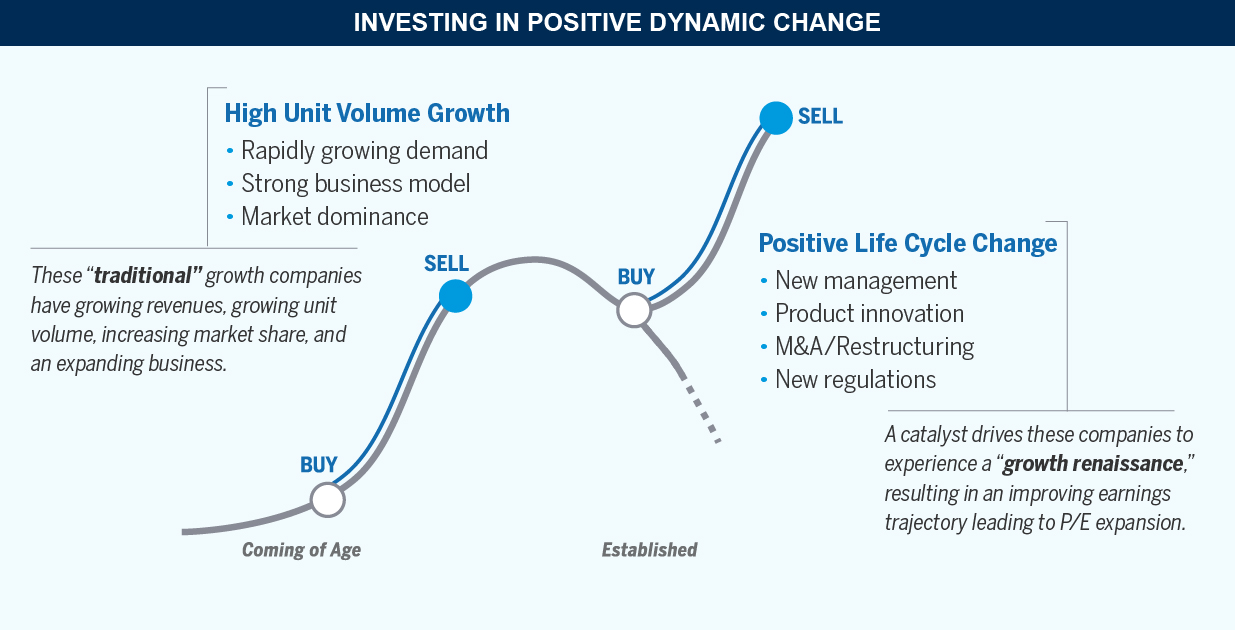
Backed by 60+ Years of Investing ExperienceFor over six decades, Alger has been at the forefront of growth equity investing. Our time-tested approach is built on our experienced investment team of analysts identifying companies undergoing Positive Dynamic Change, which we believe offers the best opportunities for investors.
Invest in Alger’s Mid Cap Growth Strategies
The views expressed are the views of Fred Alger Management, LLC (“FAM”) and its affiliates as of August 2026. These views are subject to change at any time and may not represent the views of all portfolio management teams. These views should not be interpreted as a guarantee of the future performance of the markets, any security or any funds managed by FAM. These views are not meant to provide investment advice and should not be considered a recommendation to purchase or sell securities.
Risk Disclosures: Investing in the stock market involves risks, including the potential loss of principal. Growth stocks may be more volatile than other stocks as their prices tend to be higher in relation to their companies’ earnings and may be more sensitive to market, political, and economic developments. Investing in companies of medium capitalizations involves the risk that such issuers may have limited product lines or financial resources, lack management depth, or have limited liquidity. Companies involved in, or exposed to, AI-related businesses may have limited product lines, markets, financial resources or personnel as they face intense competition and potentially rapid product obsolescence, and many depend significantly on retaining and growing their consumer base. These companies may be substantially exposed to the market and business risks of other industries or sectors, and may be adversely affected by negative developments impacting those companies, industries or sectors, as well as by loss or impairment of intellectual property rights or misappropriation of their technology. Companies that utilize AI could face reputational harm, competitive harm, and legal liability, and/or an adverse effect on business operations as content, analyses, or recommendations that AI applications produce may be deficient, inaccurate, biased, misleading or incomplete, may lead to errors, and may be used in negligent or criminal ways. AI technology could face increasing regulatory scrutiny in the future, which may limit the development of this technology and impede the future growth. AI companies, especially smaller companies, tend to be more volatile than companies that do not rely heavily on technology.
S&P 500® Index: An index of large company stocks considered to be representative of the U.S. stock market. S&P MidCap 400 Index is an unmanaged index considered representative of mid-sized US companies. The S&P indexes are a product of S&P Dow Jones Indices LLC and/or its affiliates and has been licensed for use by Fred Alger Management, LLC and its affiliates. Copyright 2026 S&P Dow Jones Indices LLC, a subsidiary of S&P Global Inc. and/or its affiliates. All rights reserved. Redistribution or reproduction in whole or in part are prohibited without written permission of S&P Dow Jones Indices LLC. S&P® is a registered trademark of Standard & Poor’s Financial Services LLC and Dow Jones® is a registered trademark of Dow Jones Trademark Holdings LLC. Neither S&P Dow Jones Indices LLC, Dow Jones Trademark Holdings LLC, their affiliates nor their third party licensors make any representation or warranty, express or implied, as to the ability of any index to accurately represent the asset class or market sector that it purports to represent and neither S&P Dow Jones Indices LLC, Dow Jones Trademark Holdings LLC, their affiliates nor their third party licensors shall have any liability for any errors, omissions, or interruptions of any index or the data included therein. Investors cannot invest directly in any index. The performance data quoted represents past performance, which is not an indication or a guarantee of future results.
Alpha measures the difference between a portfolio’s actual returns and its expected performance, given its level of risk (as measured by beta). Beta measures a portfolio’s sensitivity to market movements relative to a particular index; a portfolio with a beta of 1.00 would be expected to have returns equal to such index.
FactSet is an independent source, which Alger believes to be a reliable source. FAM, however, makes no representation that it is complete or accurate.
Price-to-earnings is the ratio for valuing a company that measures its current share price relative to its earnings per share.
Free cash flow represents the amount of cash a company generates after operating expenses and capital expenditures, divided by its shares outstanding.
Alger pays compensation to third party marketers to sell various strategies to prospective investors.
Before investing, carefully consider the Fund’s investment objective, risks, charges, and expenses. For a prospectus and summary prospectus containing this and other information or for the Fund’s most recent month-end performance data, visit www.alger.com, call (800) 992-3863 or consult your financial advisor. Read the prospectus and summary prospectus carefully before investing. Distributor: Fred Alger & Company, LLC. NOT FDIC INSURED. NOT BANK GUARANTEED. MAY LOSE VALUE.